Custom Rubber Molding
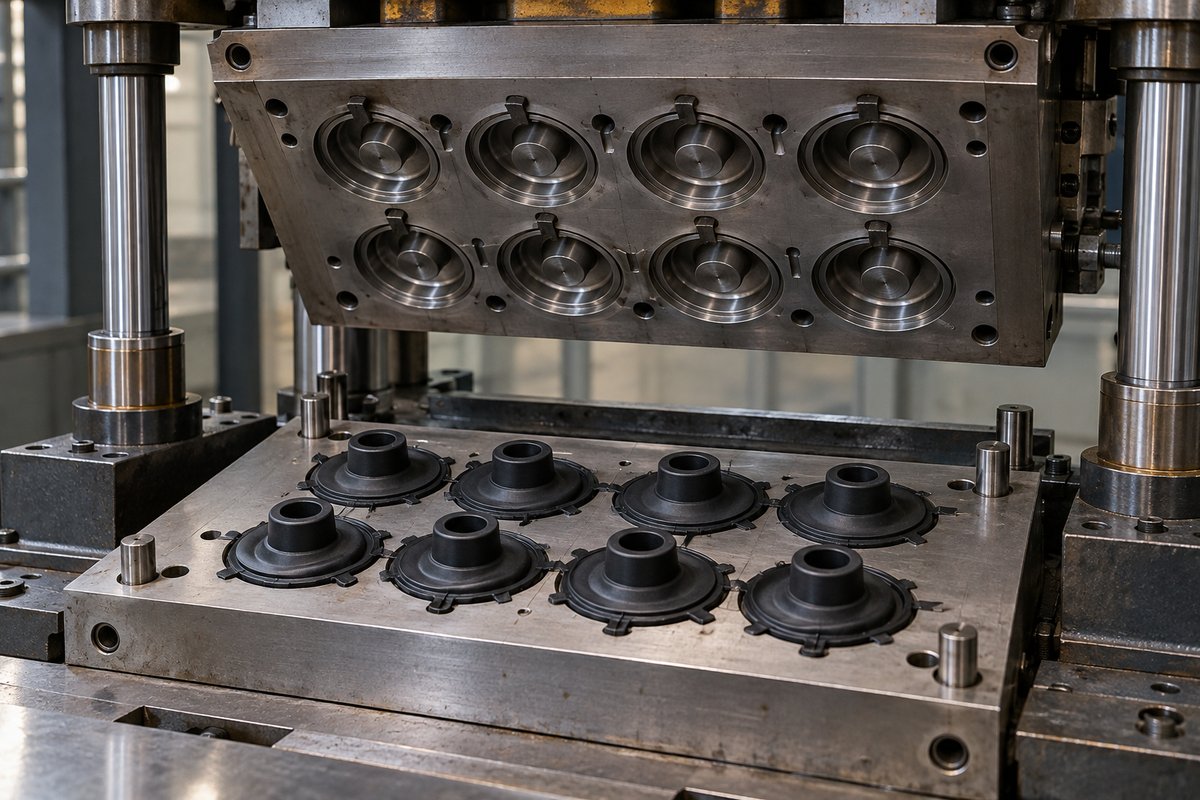
Custom rubber parts are made by shaping uncured rubber compound in a heated mold until it vulcanizes (cures). The three main molding processes — compression, transfer and injection — differ in how the rubber enters the mold, which drives tooling cost, piece price and accuracy.
Rubber molding processes compared
| Compression molding | Transfer molding | Injection molding | |
|---|---|---|---|
| How it works | Pre-weighed rubber placed in the open cavity, mold closes and cures | Rubber forced from a pot through sprues into a closed mold | Rubber injected by screw into a closed mold |
| Tooling cost | Lowest | Medium | Highest |
| Best quantity | Prototypes to medium | Medium | High |
| Strengths | Large or thick parts, low tooling cost | Inserts, tighter control than compression | Short cycles, consistent parts |
| Watch-outs | More flash, longer cycles | Material waste in pot and sprues | Higher tooling and setup cost |
For silicone parts at high volume, liquid silicone rubber (LSR) injection molding is often the better route.
Typical custom rubber parts
- Seals, gaskets, O-rings and grommets
- Bellows, boots and diaphragms
- Bumpers, feet and anti-vibration pads
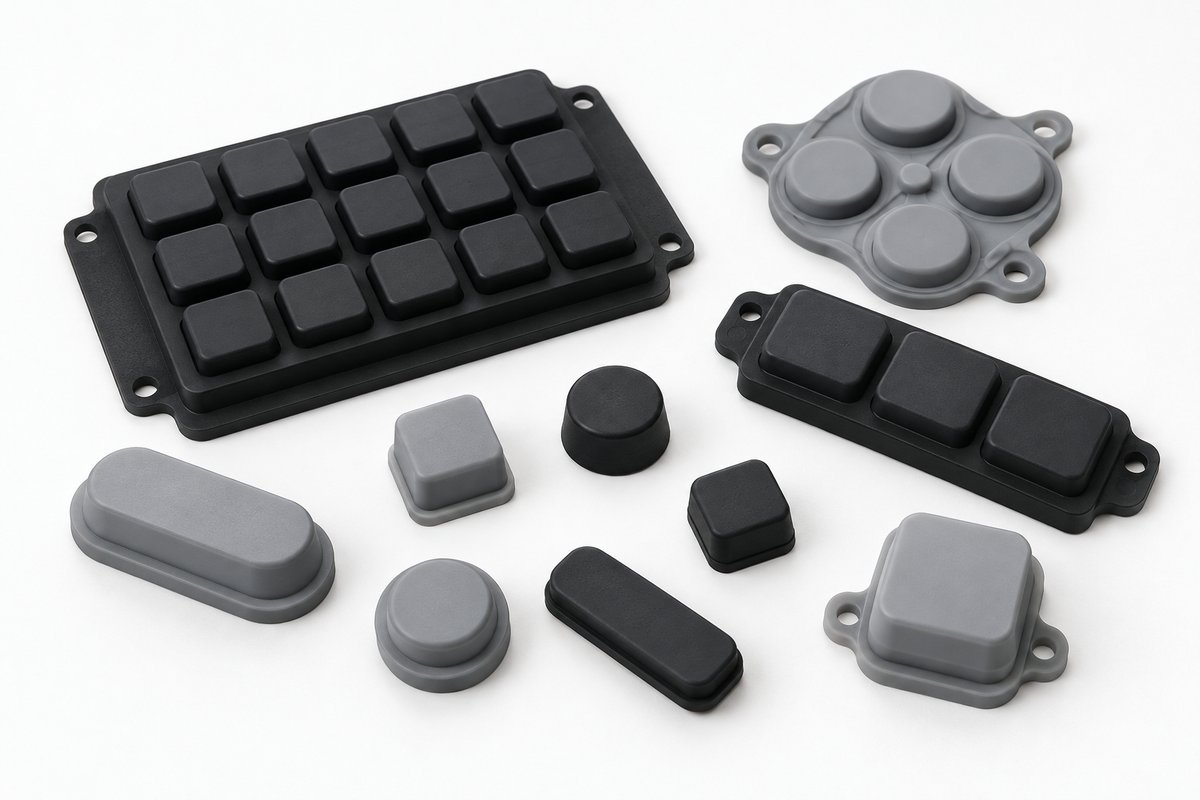
- Keypads and buttons
- Molded parts with metal or plastic inserts — see rubber-to-metal bonding
Specifying a molded rubber part
| Item | What to specify |
|---|---|
| Material | Polymer (EPDM, NBR, VMQ, FKM, CR…) or the service conditions if undecided |
| Hardness | Shore A with tolerance — ±5 Shore A is common (durometer chart) |
| Tolerances | Tolerance class per ISO 3302-1 (M1 tightest to M4), or individual tolerances |
| Flash | Where flash is acceptable and the maximum flash thickness |
| Color | Black is standard; colors depend on the polymer |
| Compliance | FDA, RoHS, REACH, UL or other requirements — tell us at the quotation stage |
| Testing | Hardness, compression set, aging or fluid tests needed for approval |
FAQ
What is the minimum order quantity for molded rubber parts?
It depends on the process and tooling. Compression molding keeps tooling cost low and suits smaller quantities; injection molding pays off at higher volumes. Send your quantities and we will suggest a route.
Can you match an existing sample without a drawing?
A physical sample helps, but we still need the critical dimensions, material requirements and operating conditions. Measuring a sample does not tell us the compound, so material should be specified or agreed separately.