Rubber-to-Metal Bonding and Overmolding
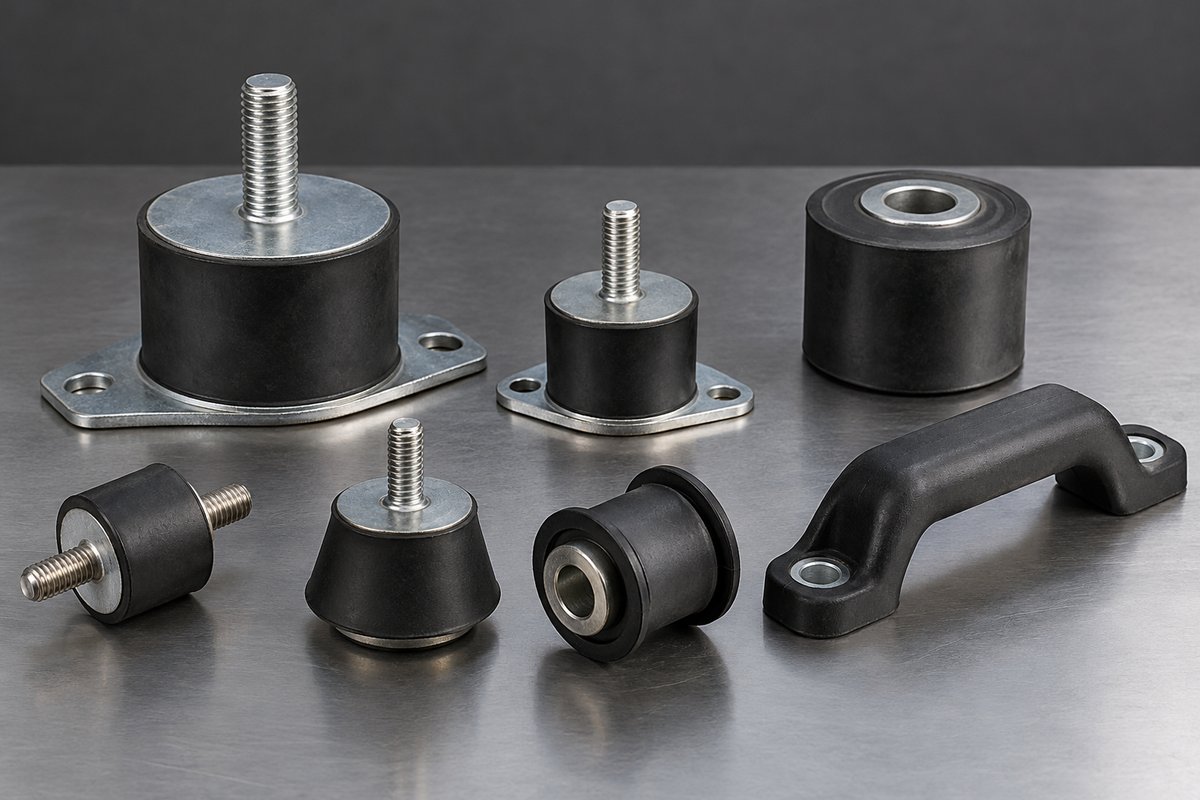
Rubber-to-metal bonding molds rubber directly onto a metal insert so the two become one part. The insert is cleaned, coated with a bonding agent and placed in the mold; the rubber bonds chemically to the metal during vulcanization. Typical parts are anti-vibration mounts, bushings, seals with metal carriers, rollers and overmolded handles.
Process steps
- Insert preparation — metal inserts are machined or stamped, then cleaned and surface-prepared (e.g. degreasing, blasting).
- Bonding agent — primer and adhesive are applied to the bonding areas.
- Molding — inserts are loaded into the mold; rubber is compression, transfer or injection molded around them and cured.
- Finishing and testing — deflashing, then bond-strength or peel testing as agreed.
Why it suits our setup
Huasheng Precision is a CNC machining manufacturer, so machined metal inserts can be made in-house and supplied to the molding partner, keeping insert tolerances and the bonded part under one order.
Design notes
| Item | Note |
|---|---|
| Bond area | Define where rubber must bond and where the metal must stay clean |
| Insert tolerances | Inserts must locate precisely in the mold to avoid flash and thin rubber sections |
| Rubber thickness | Very thin rubber layers over metal are harder to mold consistently |
| Testing | Agree bond-strength test method and acceptance (e.g. rubber tear rather than bond failure) |
FAQ
Which rubbers can be bonded to metal?
Most common elastomers — NR, NBR, EPDM, CR, FKM and silicone — can be bonded with the right bonding system. The adhesive is chosen to suit both the rubber and the metal.
Can you supply the metal inserts as well?
Yes. Metal inserts can be machined or sourced as part of the order, so you receive the finished bonded part.